In 2022, my grandmother was diagnosed with liver cancer (stage D). She initially started having severe pain that kept her and my mother (who was taking care of her) awake all night and then transformed into disability which made it impossible to get out of bed. With limited resources in China, my mother and I had to take care of her at home and in the hospital from time to time which lasted almost one year. She was later taken care of by a nurse in the hospital who also took care of her on a shift of 24-7 for a few months. The experiences of taking care of my grandmother with my mom for several months came to my attention that taking care of elderly people with illness was, indeed, an unimaginably hard task with the requirement for both mental care and physical care since it is a 24-7 job. It is a demanding and difficult task for both the patients and caregivers.
After coming to the US for graduate school, my grandmother passed away in the hospital but my mother was still unable to have a full night’s sleep due to the years of habits she had when taking care of my grandmother. Last year, I noticed a piece of news in New York that said that a group of homecare service Chinese ladies were protesting against the 24-hour shifts in the US. And it made me realize that the 24-7 shifts that my mother and the nurse have been through in China were deeply problematic. But this problem was not alone in time and space. With the aging rate increasing every year, the approximate adults to young children and elderly are approaching an alarming rate of 1:2 in the 2030s in China. And the elderly rates are also alarming in other different countries. Every adult may need to take care of an average of one child and an elderly when they reach their working age. This has increased the pressure on both the adults and the elderly who have nobody to take care of them when they are getting older. I came to realize more and more as I got to know more about the sociological theory behind it, which is a global problem. In the Global Care Chain Theory which is a theory raised by feminist sociologist Arlie Russell Hochschild, she proposed that the global network of labor is established on the migration of women caregivers who take up the responsibility of familial duty of women in developed countries to free the women in developed countries from the home chore, while these women may leave their house chores to their families in their own countries or regions. This has led me to my project of Aging with Peace, for both elderly and care service workers of Chinese in China and the US. I want to figure out a way to bring peace to both the physical pain and mental burden that aging and illness have brought to people, and their awareness and raise awareness on proposing societal awareness on the global aging issue.
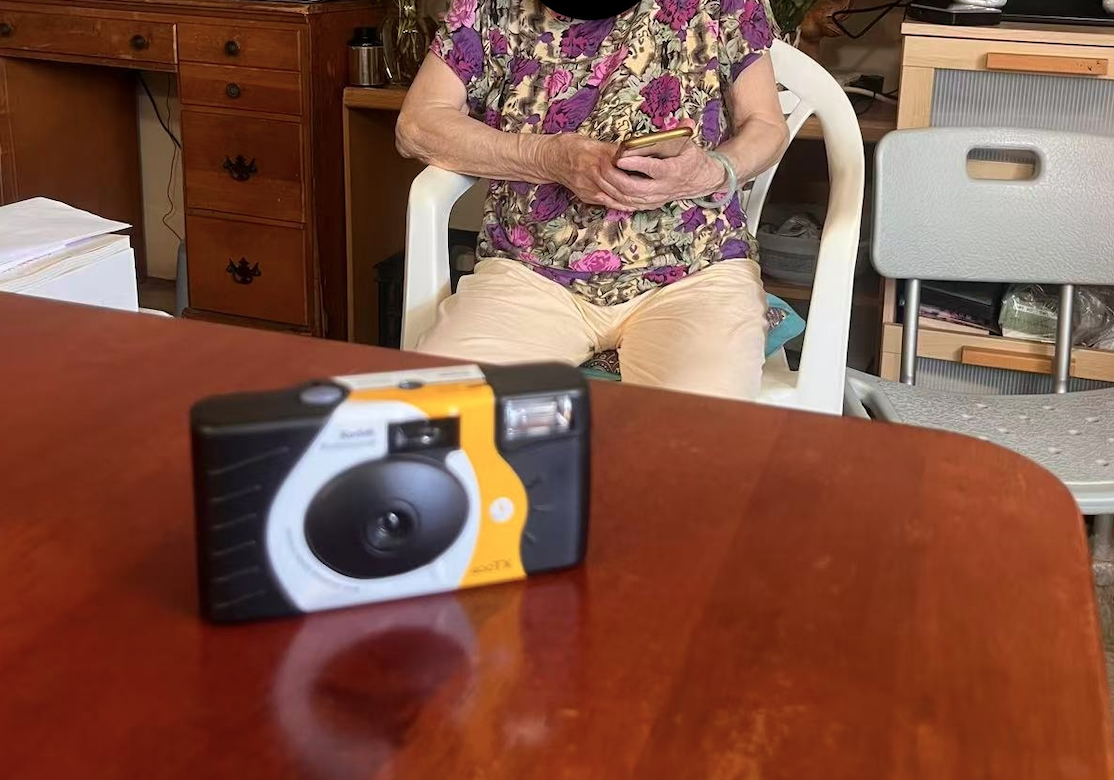
In the summer of 2025, through the support of Davis Project for Peace Fellowship, I have conducted interviews with more than 20 caregivers and patients in hospice care and send out film cameras for them to document their moments of the last stage of their lives. This meaningful journey has become an integral part of my research and ongoing artistic project to take care of caregivers and patients.